Project 03 — IoT / Embedded Systems
An end-to-end IoT smart livestock monitoring system built for D'Impian Agro Farm — automating weighing, RFID animal tagging, LoRa wireless communication, and cloud-based real-time data management across a working farm environment.
System Overview
A fully integrated farm automation system — from hardware sensors on the animal to data visualized in the cloud. Three subsystems working together for real-time livestock management.
RFID Animal Tagging
Each Dorper sheep is tagged with a unique RFID identifier. The reader logs individual animal identity at the weighing station automatically, enabling per-animal tracking over time.
Automated Weighing
Load cell sensors connected to microcontrollers capture weight readings. Data is processed and averaged for accuracy, then paired with the RFID tag for each measurement session.
LoRa + Cloud Sync
Node-to-Node LoRa transmission sends data wirelessly across the farm to a LoRa gateway. A Python backend uploads to Google Sheets for centralized, real-time livestock records accessible anywhere.
Hardware Stack
The system runs on off-the-shelf embedded hardware deployed in a real farm environment — designed for durability, low power, and long-range communication.
Sensing Node
Gateway & Backend
Documentation
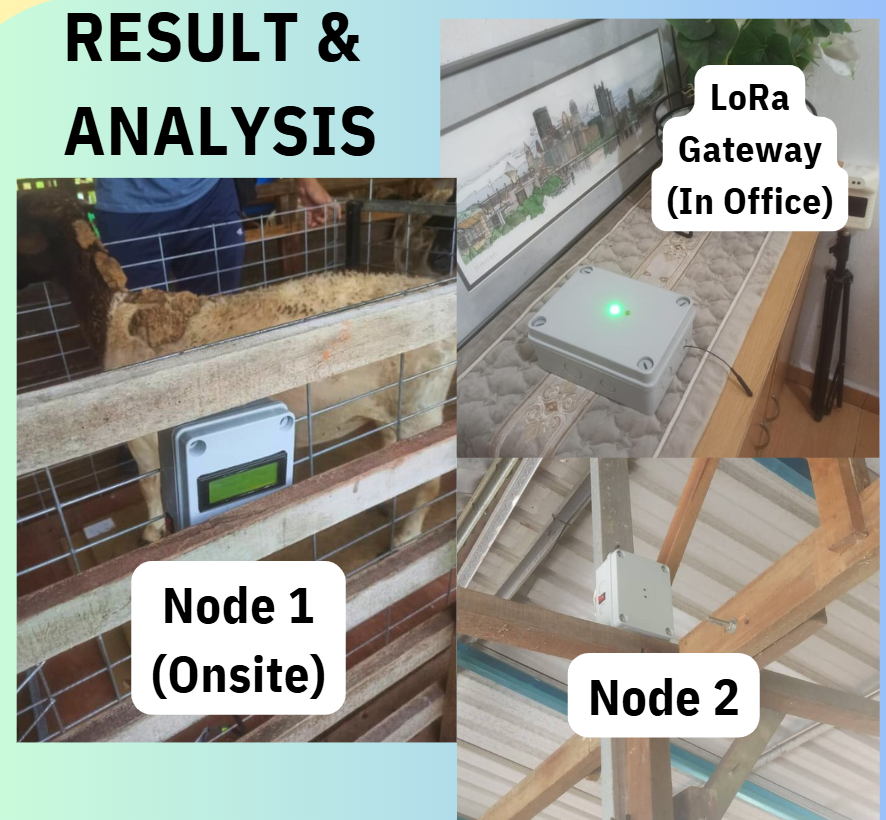
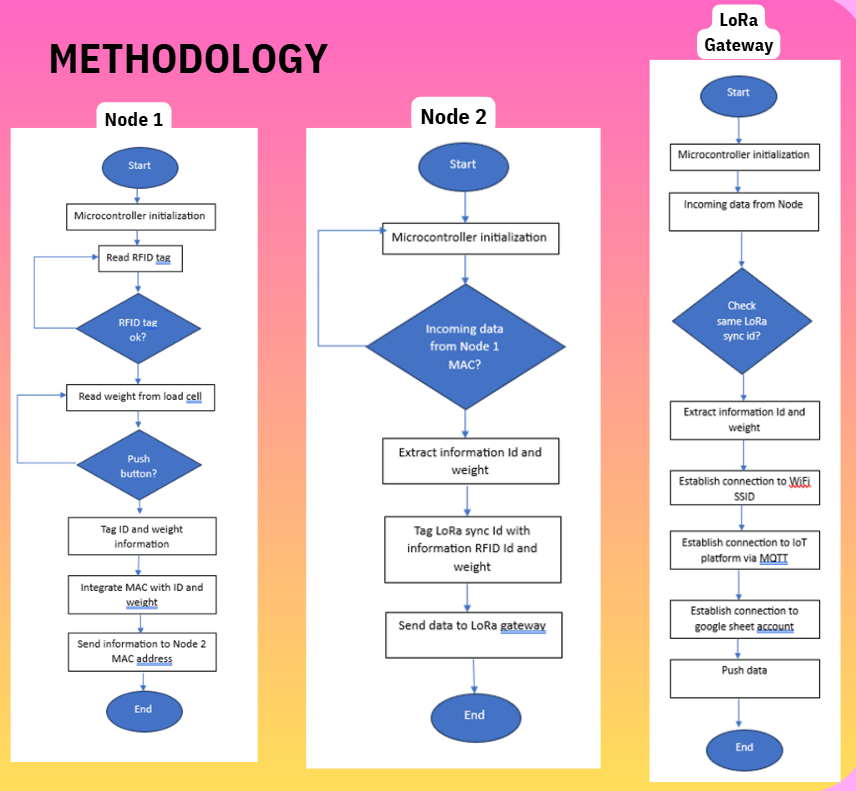
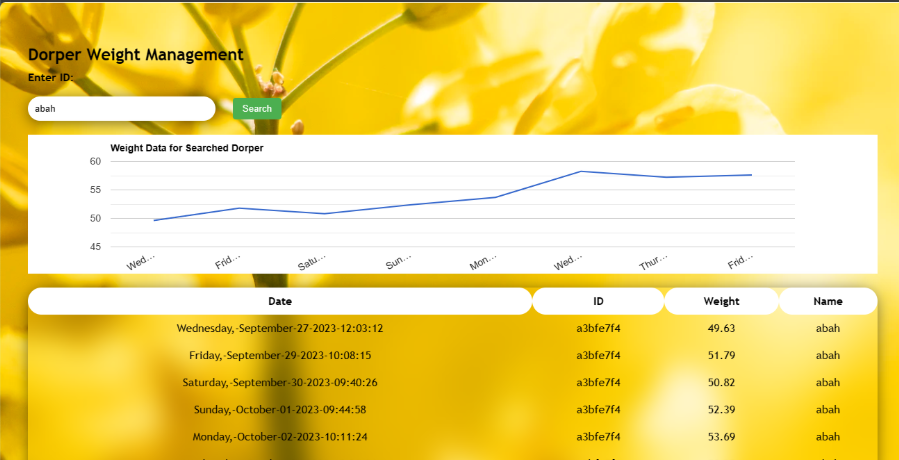
Field photos from the DorperNet deployment, hardware assembly, and on-site livestock monitoring workflow.
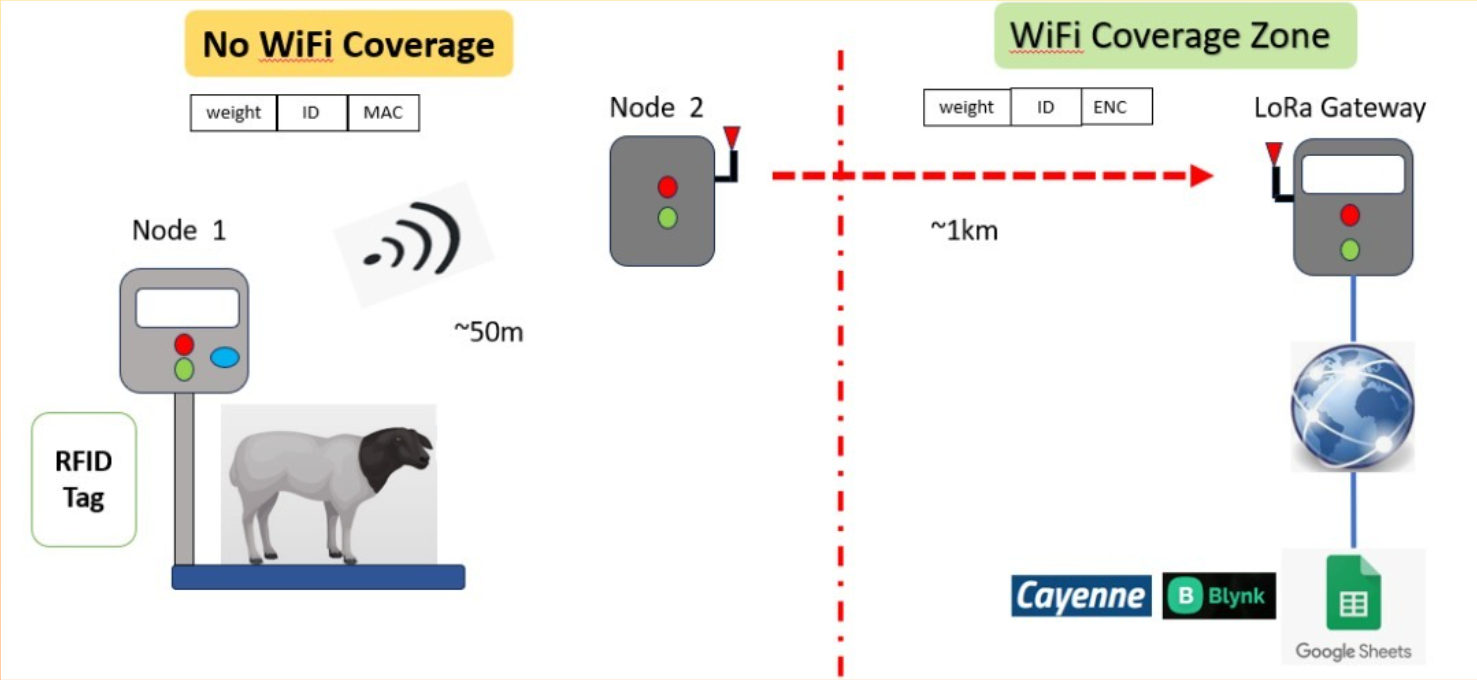
System Design Flow
System on-field positioning
System Flowchart
Google App Script Dashboard
Deployment Process
01
Hardware Assembly
ESP32, RFID reader, HX711 + load cell, and LoRa radio wired and encased for outdoor farm use. PCB or breadboard prototyping stage.
02
Firmware Development
Embedded code in C++ / Arduino framework handling RFID reads, load cell ADC sampling, averaging, and LoRa packet transmission.
03
Gateway + Cloud
Python script on gateway device receives LoRa packets, parses data, and uploads livestock records to Google Sheets via the Sheets API in real time.
04
Onsite Validation
Calibrated load cells on-site with known weights. Validated RFID read rates, LoRa range across the farm, and end-to-end data integrity in production conditions.
Outcomes
Deployed, calibrated, and validated the full system in a real working farm environment during the internship period at D'Impian Agro Farm.
Key Deliverables
Additional Information
Additional context from the real farm deployment, including field constraints, technical decisions, and lessons from operating the system onsite.
Challenges
The deployment had to account for farm interference, outdoor protection for electronics, calibration stability, and reliable wireless links across the site.
Lessons Learned
The project reinforced the value of robust field calibration, simple telemetry pipelines, and designing embedded systems around real operating conditions instead of lab assumptions.